
 By
By 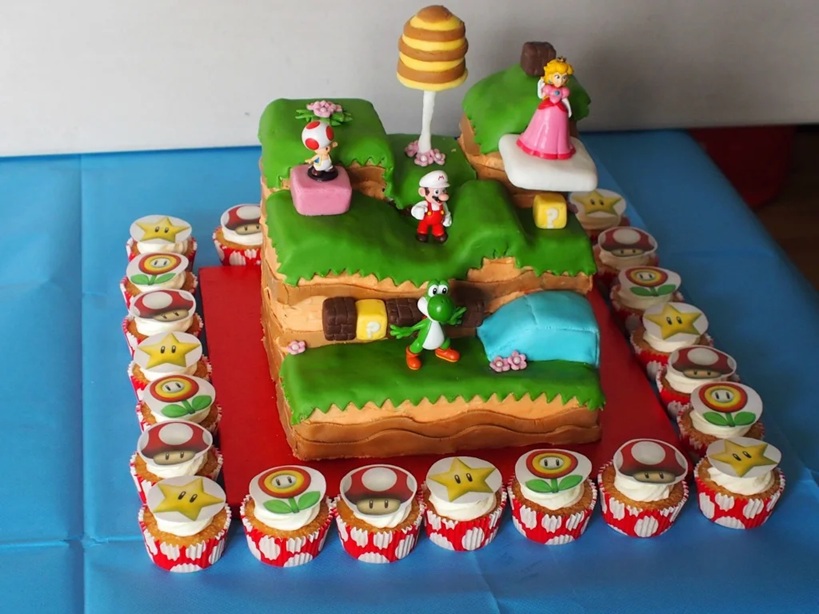
The Super Mario World cake phenomenon reveals something profound about human aesthetic sensibilities, our species’ inexorable drive to transform digital landscapes into tangible, consumable art forms that mirror the very design principles found throughout the natural world. Like the intricate patterns of butterfly wings or the geometric precision of honeycomb structures, these confectionery creations demonstrate how deeply embedded biological preferences shape even our most seemingly artificial cultural expressions.
To observe a skilled baker crafting Mario World-themed celebrations is to witness cultural evolution in action, the rapid adaptation that marks our species as uniquely capable of transmitting complex information through learned behaviour rather than genetic inheritance.
The Evolutionary Aesthetics of Super Mario World Design
The visual elements that define Super mario world cakes tap into aesthetic preferences that emerged over millions of years of human evolution. The vibrant primary colours, those brilliant reds, blues, yellows, and greens, stimulate the same neural pathways that once helped our ancestors identify ripe fruits, clear skies, and verdant landscapes rich with resources.
Consider the geometric patterns that characterise these edible artworks: precise squares of question mark blocks, perfect circles of coins, symmetrical pipe arches. These forms resonate with preferences for mathematical regularity found throughout natural systems, from sunflower seed spirals to hexagonal basalt tessellations.
The colour combinations employed in Super Mario World cake design follow principles observed across countless species:
• High contrast patterns that ensure immediate visual recognition
• Bright warning colours that signal importance and demand attention
• Complementary hues that create visual harmony whilst maintaining distinctiveness
• Repetitive motifs that aid pattern recognition and memory formation
Social Behaviour and Collaborative Creation
The creation of Super Mario World-themed cakes represents fascinating human cooperative behaviour. Like social insects building elaborate structures, families unite around these projects, each contributing specialised skills towards common celebratory goals.
The transmission of decorating techniques through online communities mirrors information spread through animal societies, from honeybee dance language to whale cultural traditions. YouTube tutorials create vast knowledge networks that transcend geographical boundaries, enabling rapid technique innovation.
Intergenerational learning plays a crucial role in Super Mario World cake culture. Parents who experienced the original games serve as cultural translators, helping younger generations understand symbolic significance whilst learning new technical skills, a bidirectional information flow rarely observed in other species.
Pattern Recognition and Cognitive Processing
The human brain’s remarkable capacity for pattern recognition explains our species’ attraction to Super Mario World cake designs. The pixelated aesthetic that defines these creations corresponds perfectly to how our visual processing systems organise complex information into comprehensible units.
Singapore’s thriving baking community has embraced this cognitive compatibility, with local confectionery artists observing that “Super Mario World cakes capture children’s attention immediately because the bold patterns and familiar characters activate multiple recognition systems simultaneously, creating powerful emotional responses that enhance celebratory experiences.”
The geometric simplicity underlying Super Mario World designs facilitates “perceptual fluency”, the ease with which our brains process visual information. This fluency generates positive emotional responses that contribute to these cakes’ enduring cross-cultural popularity.
Environmental Adaptation and Cultural Evolution
Like organisms adapting to new ecological niches, Super Mario World cake designs have evolved to suit different cultural environments whilst maintaining their essential characteristics. The fundamental visual vocabulary remains constant, recognisable characters, distinctive colour palettes, iconic landscape elements, whilst local variations reflect available ingredients, traditional techniques, and regional aesthetic preferences.
This adaptive flexibility demonstrates what biologists call “phenotypic plasticity”, the ability of a single genetic template to produce different expressions depending on environmental conditions. In cultural terms, Super Mario World cake concepts serve as flexible templates that communities can modify whilst preserving core recognisable features.
Key adaptive strategies include:
• Ingredient substitutions that accommodate local availability and dietary requirements
• Scale modifications that suit different celebration formats and family structures
• Technique variations that utilise available tools and skill levels
• Cultural integration that incorporates local celebratory traditions
Sensory Integration and Multi-Modal Experience
Super Mario World cakes engage multiple sensory systems simultaneously, creating rich experiences that approximate actual gameplay’s multi-sensory nature. Visual spectacle combines with tactile exploration, olfactory stimulation, and gustatory pleasure to produce “cross-modal enhancement”, simultaneous sensory inputs that amplify perception and memory formation.
This integration serves important social functions, creating shared experiences that strengthen group cohesion, much as shared foraging once united our ancestral communities.
Biomimetic Design Principles
The most successful Super Mario World cake designs often incorporate principles observed throughout natural systems. The layered landscape constructions mirror geological stratification, whilst the character positioning reflects principles of visual hierarchy found in forest canopy structures.
Professional decorators intuitively apply concepts familiar to any student of natural history: structural engineering that ensures stability, colour distribution that guides visual attention, and proportional relationships that create aesthetic harmony. These applications represent unconscious biomimicry, the adoption of natural design solutions for human purposes.
Cognitive Development and Learning Enhancement
Children engaged in Super Mario World cake projects exercise cognitive capacities that once enabled our species to construct tools, navigate environments, and solve problems. These activities strengthen neural pathways associated with spatial reasoning, motor control, and executive function.
Future Evolution and Technological Integration
As digital technologies continue evolving, we can anticipate corresponding adaptations in Super Mario World cake design. Advanced techniques like 3D printing and augmented reality integration may transform these static creations into dynamic, interactive experiences.
Yet the fundamental appeal will persist, our species’ drive to materialise imaginative visions, create beauty that serves aesthetic and social functions, and celebrate community through shared creative endeavours.
The enduring fascination with these edible landscapes speaks to something essential about human nature: our unique capacity to transform abstract concepts into tangible expressions of joy, ensuring that each carefully crafted super mario world cake becomes a testament to the creative potential that distinguishes our species among all Earth’s remarkable life forms.






Comments