
 By
By 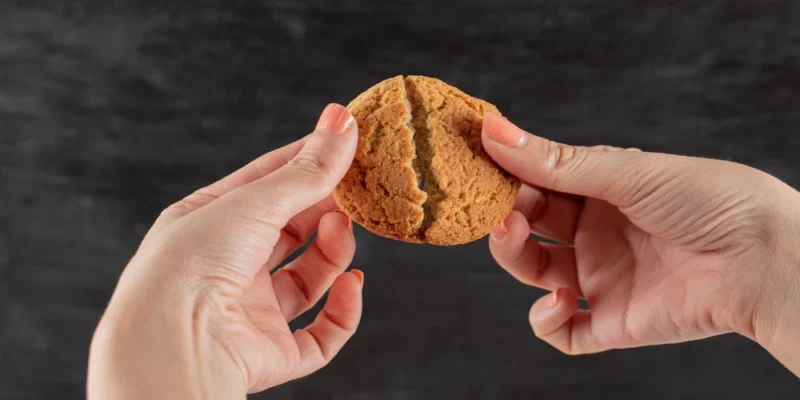
A cookie tells you a lot about itself before you even take a bite, if you know what to look for. Whether you’re baking at home or picking out chocolate chip cookies in Singapore, paying attention to the cracks, edges and centre can reveal quite a bit about texture, freshness and how the cookie was actually baked.
What the Cracks on Top Reveal
The surface cracks that form on top of a cookie aren’t just decorative; they say something about the baking process itself.
- Fine, delicate cracks often indicate a cookie with a slightly crisp exterior and a softer interior.
- Deep, pronounced cracks can suggest a higher sugar content or a specific mixing technique.
- A completely smooth surface without any cracking may point to a denser, more cake-like texture.
What the Edges Reveal
The edges of a cookie are usually the first part to finish baking, making them a useful indicator of overall doneness.
- Golden brown edges generally suggest a well-baked cookie with good structural integrity.
- Pale, underbaked edges may indicate a shorter baking time or a lower oven temperature.
- Overly dark or hardened edges often point to a cookie that spent slightly too long in the oven.
What the Centre Reveals
The centre of a cookie tends to reveal the most about its overall texture and moisture content.
- A soft, slightly underset centre generally suggests a chewy, moist texture once cooled.
- A firmer, fully set centre often indicates a crisper, more uniform texture throughout.
- An overly doughy or wet-looking centre can suggest the cookie needed a little more time to bake.
Comparing What Each Feature Indicates
| Feature | What It Often Reveals | What to Look For |
|---|---|---|
| Cracks | Sugar content and mixing style | Fine, delicate lines rather than none at all |
| Edges | Overall doneness | Golden brown rather than pale or overly dark |
| Centre | Final texture and moisture | Slightly soft rather than raw or fully hardened |
This comparison reflects general tendencies, since recipes and personal preferences can shift what an ideal cookie actually looks like.
Putting It All Together When Judging a Cookie
None of these three features tell the full story on their own, and it’s really the combination that reveals the most.
- A cookie with golden edges but a raw-looking centre may not be fully baked despite appearing done.
- Fine cracks paired with a soft centre often indicate a well-balanced, chewy cookie.
- Consistency across all three features generally points to careful, well-controlled baking.
What to Consider When Choosing Cookies Elsewhere
These same visual cues remain useful even when you’re not the one doing the baking yourself.
- Check whether the edges and centre look consistent across an entire batch, not just one sample cookie.
- Look for signs of freshness, since cookies that have sat out too long can lose their intended texture.
- If ordering cookie delivery in Singapore, consider how travel time might affect texture by the time the cookies arrive.
- Ask about baking methods if you’re unsure whether a particular texture was intentional or accidental.
Common Mistakes People Make When Judging Cookies
A few habits can lead to the wrong conclusion about a cookie’s quality, even with these visual cues in mind.
- Judging a whole batch based on a single cookie, when texture can vary slightly across a tray.
- Assuming a smooth, crack-free top always means a lower-quality cookie, when it may simply reflect a different style.
- Overlooking how cooling time affects appearance, since a cookie’s texture can still be settling right out of the oven.
- Focusing only on appearance while ignoring smell or texture cues that also indicate freshness.
A Closer Look Is Worth It
Paying attention to these small visual details turns choosing or baking a cookie into something a little more deliberate, rather than leaving the outcome purely to chance. Once you know what cracks, edges and centre are actually telling you, it becomes much easier to recognise a genuinely well-made cookie at a glance.
Visit Nasty Cookie to taste indulgence from the cracks on top to the centre of every cookie.


Comments